Unraveling the Mystery: What Exactly is the Opposite of Verso?
Have you ever paused to consider the precise terminology used to describe the pages within a book or a document? While terms like "front" and "back" are common, the world of printing, publishing, and historical documentation employs a more specific and elegant pair of terms: recto and verso. If you've ever pondered the question, "What is the Opposite Of Verso?", the answer is a succinct and historically rich word: RECTO.
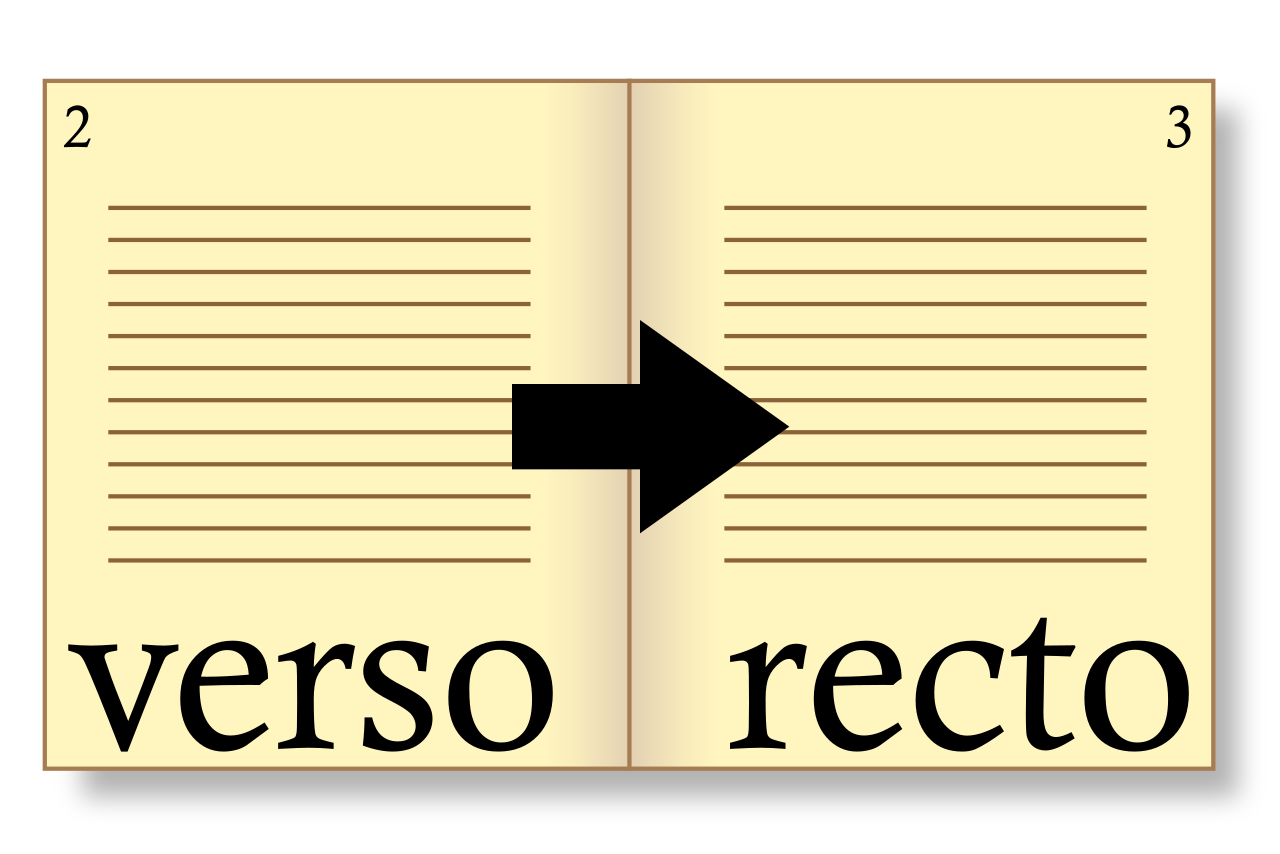
To truly appreciate recto, let's first understand its counterpart. The term "verso" originates from the Latin phrase verso folio, meaning "on the turned page." In practical terms, the verso refers to the left-hand page of an open book, or the back side of a single sheet of paper. It's typically an even-numbered page, serving as the reverse side to what precedes it.
Conversely, recto, derived from the Latin recta pagina ("right page") or recto folio ("on the right side [of the leaf]"), unequivocally denotes the right-hand page of an open book. When referring to a single sheet, the recto is considered the front side. Historically, and still predominantly today, recto pages bear odd numbers (1, 3, 5, etc.). This convention dates back centuries, to the practices of scribes and early printers who often began new sections or important elements on the prominent right-hand page. Understanding this fundamental distinction is key to navigating the intricacies of page layout, design, and even solving certain linguistic puzzles.
Recto and Verso in the World of Printing and Publishing
The distinction between recto and verso is far more than a mere linguistic curiosity; it forms a cornerstone of printing, publishing, and document design. This deliberate page assignment significantly impacts how information is presented, perceived, and absorbed by the reader.
Strategic Layout and Design Principles
- Opening Pages: New chapters, title pages, half-title pages, and dedications are almost universally positioned on a recto page. This creates a visual break and a sense of beginning, drawing the reader's eye to the right-hand side as they turn the page. This practice leverages the natural human tendency to look right when starting a new visual journey.
- Page Numbering: As mentioned, recto pages traditionally carry odd numbers, and verso pages carry even numbers. This standard is ingrained in publishing norms globally, providing a clear and consistent system for referencing content.
- Visual Hierarchy: Publishers and designers use the recto/verso distinction to establish a visual hierarchy. Content deemed more significant or needing greater emphasis is often placed on recto pages, taking advantage of their prime visual real estate.
- Margins and Gutter: The design also considers the 'gutter' – the inner margin where pages meet the binding. Recto and verso pages have mirrored margin requirements to ensure consistent readability and avoid text disappearing into the binding.
Think about flipping through a beautifully designed magazine or a weighty academic journal. The strategic placement of advertisements, imagery, and text blocks on recto or verso pages is a deliberate choice aimed at enhancing the reading experience and guiding the reader's gaze. Even in the digital age, where physical pages are simulated on screens, the underlying principles of sequential presentation and the "front/back" concept of a leaf continue to influence UX design for e-books and PDF viewers.
Beyond the Book: Other Applications
The recto/verso concept isn't limited solely to bound volumes. Its application extends to various fields requiring precise description of two-sided objects:
- Art and Photography: When describing prints, drawings, or photographs, art historians and conservators often refer to the "recto" for the primary image and the "verso" for notes, signatures, or provenance information on the back.
- Manuscripts and Archival Science: For ancient texts, historical documents, and handwritten manuscripts, meticulously identifying content on the recto (front) and verso (back) of each leaf is critical for cataloging, research, and preservation. This precision avoids ambiguity, especially when dealing with fragile, unpaginated artifacts.
- Philately (Stamp Collecting): While not universally used, some collectors and experts might reference the front design of a stamp as its recto and any back markings or gum as its verso.
Cracking the Code: "Opposite Of Verso" in Crossword Puzzles
For word enthusiasts and crossword aficionados, the term "verso" (and consequently its opposite) is a familiar face in daily puzzles. As the reference context highlights, clues like "Direct opposite of verso" frequently appear, often with "RECTO" as the satisfying five-letter solution.
Crossword constructors love these types of clues because they test a solver's knowledge of niche terminology and Latin roots. The clue "Direct opposite of verso (found hidden in this clue!)" is particularly clever, as it playfully points to the solution itself, making the discovery even more rewarding. It’s a classic example of how crosswords not only entertain but also subtly educate, bringing specialized vocabulary into common discourse.
Tips for Solving "Opposite Of Verso" Crossword Clues With RECTO:
- Context Clues: Always consider the broader theme of the puzzle or the other clues if you're stuck. Often, there might be a literary or Latin theme running through.
- Letter Count: Knowing that "RECTO" is a 5-letter word can immediately narrow down possibilities, especially when faced with multiple potential synonyms.
- Think Beyond the Obvious: Crossword clues rarely just ask for a straightforward definition. "Opposite of verso" might seem simple, but the constructor expects you to know the specific, specialized term rather than a generic "front."
- Latin Roots: Many terms in publishing and academia, like recto and verso, have Latin origins. Familiarity with common Latin prefixes and suffixes can be a huge asset.
- Practice Makes Perfect: The more crosswords you solve, the more these specific terms and patterns become second nature. Keep an eye out for similar clues involving printing or book terminology.
The prevalence of "RECTO" in crossword puzzles underscores its established place in language, far beyond the confines of printing presses. It's a testament to how specialized terms can permeate popular culture through engaging linguistic challenges.
Practical Significance and Why These Terms Endure
Despite the rise of digital media, the terms recto and verso maintain their relevance. Their enduring presence speaks to the fundamental need for precision in describing physical documents and the conceptual structure of presented information.
- Clarity in Professional Communication: For professionals in library science, archival work, graphic design, and publishing, using "recto" and "verso" eliminates ambiguity. Instead of vaguely referring to "the front of the page" or "the back of the sheet," these terms provide universally understood, specific points of reference. This is crucial when discussing layouts, printing errors, or cataloging historical artifacts.
- Historical and Academic Accuracy: When studying ancient manuscripts, medieval codices, or early printed books, scholars depend heavily on the recto/verso distinction to accurately describe pagination, annotate findings, and trace the evolution of texts. It ensures that analyses are grounded in precise factual descriptions of the physical object.
- Enhancing Design and Readability: The strategic placement of elements on recto or verso pages is not arbitrary. It's a deliberate design choice that leverages human visual habits to create a more intuitive, engaging, and readable experience. Understanding these principles allows designers to craft more effective and aesthetically pleasing publications.
- Bridging the Digital Divide: Even when a book is digitized and viewed on a screen, the conceptual framework of recto and verso persists. E-readers often mimic the physical page turn, and PDFs are structured with an implicit understanding of these traditional page roles, maintaining continuity with centuries of publishing practice.
Ultimately, recto and verso are more than just old words; they are vital tools for clear communication, historical preservation, and effective design. They remind us of the meticulous craft involved in creating and sharing written knowledge.
Conclusion
In the intricate world of printing, publishing, and document handling, precision is paramount. The term "verso," denoting the left-hand or back page, finds its definitive and universally accepted Opposite Of Verso in the word RECTO, which signifies the right-hand or front page. This seemingly simple distinction carries profound implications, influencing everything from historical manuscript cataloging to modern book design and even providing clever challenges in crossword puzzles. Understanding recto and verso is not merely about knowing jargon; it's about appreciating the logical, historical, and practical framework that underpins how we organize and consume information. These enduring terms continue to serve as essential cornerstones for anyone working with or appreciating the printed word.